A Practical Path to Direct-to-Cloud Video Surveillance
For many organizations, the move to cloud video surveillance is no longer a question of if—it’s a question of how.
The benefits are clear:
-
Simplified infrastructure
-
Remote accessibility
-
Centralized management
-
Greater scalability
But in practice, most organizations face a common challenge:
How do you move to the cloud without replacing your existing cameras?
Because for many, that’s not realistic.
The Challenge: Moving Forward Without Starting Over
Most facilities today operate with:
-
Existing camera infrastructure
-
On-premise NVRs or VMS platforms
-
Budget constraints and phased investment plans
-
Operational risk tied to system changes
A full system replacement often means:
-
High upfront cost to upgrade cameras
-
Operational disruption
-
Delayed decision-making
As a result, many organizations stay stuck in legacy systems—not because they want to, but because the path forward feels too complex.
What Is a Stream Connector in Cloud Video Surveillance?
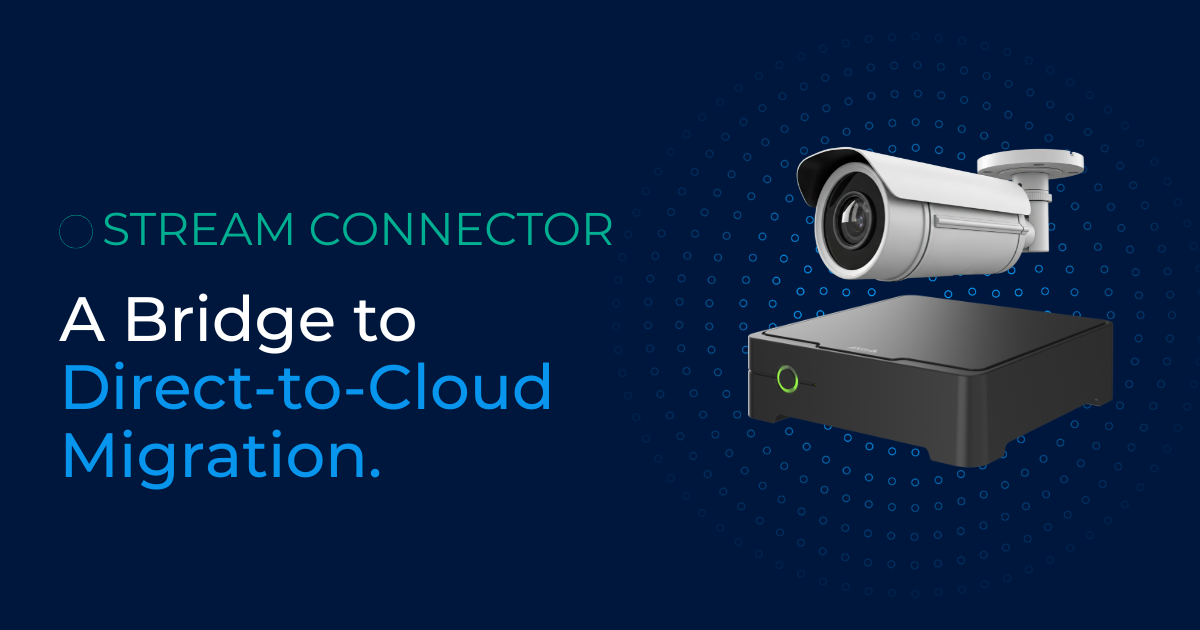
A Stream Connector is a solution that allows existing RTSP-compatible cameras to connect to a cloud-based security platform—without requiring full system replacement.
It acts as a bridge between legacy infrastructure and modern direct-to-cloud security architecture, enabling organizations to:
-
Continue using existing cameras
-
Reduce upfront costs
-
Introduce cloud capabilities immediately
-
Transition at their own pace
Instead of an all-or-nothing approach, it provides a flexible path to modernization.
From Legacy to Direct-to-Cloud: A Practical Migration Path
This table illustrates the transition from legacy on-premise video surveillance systems to hybrid environments using Stream Connector, and ultimately to fully direct-to-cloud security architecture.
Legacy Systems Hybrid with Stream Connector Direct-to-Cloud
On-prem NVR/VMS Y6OS + Stream Connector Y6OS Native Cloud
Cameras > NVR > VMS Cameras > Stream Connector > Y6OS Cameras > Y6OS
Siloed Systems
High Hardware Footprint
Manual ManagementUnified Cloud Interface
Reduced Hardware
Centralized VisibilityFully Cloud-Native
Minimal Infrastructure
Managed Service
Most organizations don’t make this transition overnight.
A more effective approach is phased:
-
Start with what you have
Keep your existing cameras and infrastructure in place. -
Introduce cloud visibility immediately
Bring video into a unified cloud platform without disruption. -
Evolve toward direct-to-cloud over time
Transition to native cloud-connected devices when it makes sense.
How to Modernize Without Disruption
Modernizing your security system doesn’t have to mean starting over.
A phased approach allows you to move forward while minimizing risk.
1. Preserve Existing Investments
Avoid replacement of functional camera infrastructure. Extend the value of what’s already deployed.
2. Introduce Cloud Capabilities Immediately
Gain access to:
-
Centralized video management
-
Remote access across locations
-
Unified visibility across systems
Without waiting for a full system overhaul.
3. Reduce Complexity Over Time
As you transition, you can:
-
Reduce reliance on on-premise hardware
-
Simplify system architecture
-
Lower long-term maintenance requirements
4. Transition on Your Timeline
Upgrade devices and expand capabilities when it aligns with:
-
Budget cycles
-
Operational priorities
-
Technology refresh plans
Beyond Video: Toward Unified Situational Awareness
As organizations modernize, video becomes part of a larger ecosystem.
Security teams are increasingly looking to unify:
-
Video surveillance
-
Access control
-
Environmental monitoring with Sensors
-
Audio detterance
- Professional Monitoring
The goal is not just visibility—but context.
To see how connected systems enhance situational awareness, explore how adjacency groups provide deeper context across events and devices:
https://www.yoursix.com/blog/introducing-adjacency-groups/
Why This Matters Now
Organizations today are under pressure to:
-
Reduce infrastructure complexity
-
Improve operational visibility
-
Enable remote and distributed management
-
Future-proof their technology investments
The challenge isn’t understanding the value of cloud – it’s finding a way to get there without disruption.
The Bottom Line
You don’t have to replace your entire system to move forward.
A direct-to-cloud future is achievable—without starting over.
By taking a phased approach, organizations can:
-
Modernize at their own pace
-
Reduce risk and cost
-
Unlock immediate value
-
Build toward a fully cloud-native security environment
Frequently Asked Questions
Can I move to cloud video surveillance without replacing cameras?
Yes. Solutions like Stream Connector enable existing RTSP-compatible cameras to connect to a cloud platform, allowing a phased migration without immediate replacement.
What is direct-to-cloud video surveillance?
Direct-to-cloud video surveillance streams video directly from devices to a cloud platform, eliminating the need for on-premise recording infrastructure.
How do you migrate from a legacy VMS to the cloud?
If migrating to a direct-to-cloud solution is not feasible. The most effective approach is phased, starting with a bridge solution that connects existing cameras to the cloud, then transitioning to native cloud-connected devices over time.
Is cloud video surveillance secure, and what about network vulnerabilities?
Security is a critical consideration when modernizing any system. Many legacy video surveillance environments rely on on-premise infrastructure, open ports, and aging firmware—factors that can increase vulnerability over time.
Modern cloud-based platforms are designed with security in mind, helping reduce risk through centralized management, regular updates, and more controlled network exposure. When evaluating solutions, it’s important to choose a provider that prioritizes secure architecture and minimizes potential attack surfaces.
A phased approach to modernization not only improves visibility—it also provides an opportunity to reduce long-term security risks associated with legacy systems.
Call to Action
If you’re evaluating how to modernize your security system without replacing existing infrastructure, YourSix and its partner network can help you take the next step—on your timeline. Contact Us – We’ve got your back.